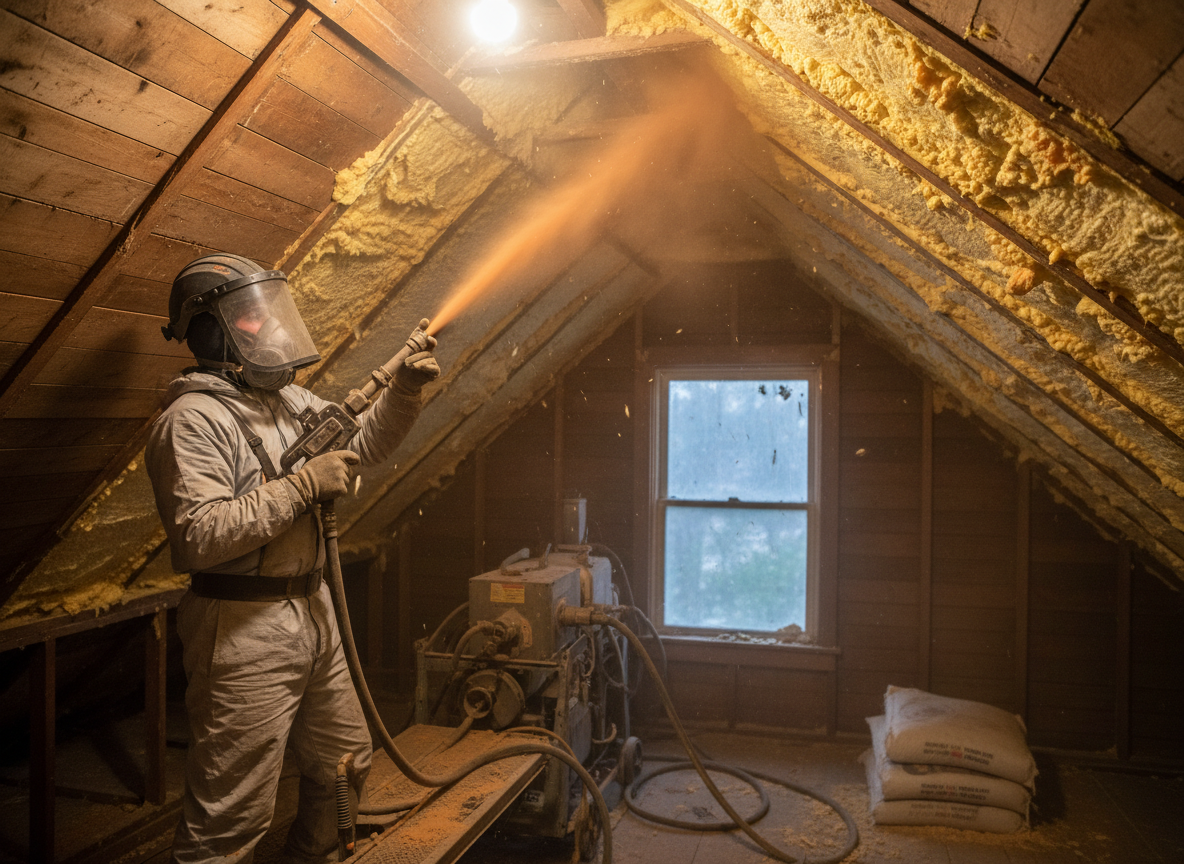
Sand blasting removes rigid spray foam from roof voids and wall cavities in Plymouth’s older housing stock. Many terraces and semis built before 1950 feature solid stone or brick walls that hold moisture longer than modern builds. The wet Devon climate keeps these substrates damp for much of the year, so the foam bonds more strongly to lime mortar and timber laths. Abrasive blasting at controlled pressure strips the material without fracturing the original masonry, but operators must monitor dust migration into neighbouring properties along narrow streets such as those in Stonehouse and Mutley.
Edge cases appear regularly around the Barbican and on the Hoe where salt-laden air has already corroded fixings behind the foam. Blasting reveals hidden rot that must be treated before new insulation is considered. Homeowners sometimes attempt DIY scraping first; this leaves thin residue that later prevents proper adhesion of replacement materials and voids any future guarantees. Professional crews use contained blasting booths and negative-air machines to keep silica dust out of living spaces.
Seasonal Timing in the Plymouth Area
Work is scheduled outside the heaviest winter rain periods because exposed cavities must dry before new insulation is installed. Spring and early autumn offer the best windows when daytime temperatures stay above 10 °C and humidity drops enough for moisture readings to fall below 18 %.
What Often Gets Missed
Original lathe and plaster ceilings in Edwardian homes can be pulled loose by the vibration of blasting. Technicians check every joist and ceiling fixing before starting and install temporary props where needed to prevent collapse.
Technician insight
In Plymouth, the thing that catches most people out with sand blasting spray foam insulation removal is the salt air from the waterfront that has already started corroding hidden nails and straps in pre-1930 stone houses; once the foam is gone those fixings can fail within weeks if not treated.
Stonehouse Terrace Void
Homeowner noticed musty smell after heavy winter rain. We found spray foam still holding moisture against the rear stone wall. Sand blasting cleared the foam and revealed several corroded joist ends. We treated the timber, confirmed dryness over three days, and left the cavity ready for new ventilation.
How it works
- 1
Site Assessment
Inspect cavities, test substrate moisture, and map access points in the Plymouth property.
- 2
Containment Setup
Install dust barriers, negative-air units and floor protection to isolate the work area.
- 3
Controlled Blasting
Remove foam layer by layer using calibrated abrasive media while monitoring wall integrity.
- 4
Debris Extraction and Clean
Vacuum all residue, treat exposed timber where required, and ventilate the space.
- 5
Final Moisture Check
Confirm substrate dryness before handover and advise on next insulation options.
Pricing
Pricing varies by property size, foam depth, and access difficulty in Plymouth terraces and semis.