Plymouth's older terraced houses and post-war semis in neighbourhoods like Stonehouse and Mutley often have spray foam applied directly to roof undersides or between joists. Coastal humidity and frequent rain drive moisture into the foam, leading to rot in timber and corrosion on metal fixings that only becomes visible once ceilings start staining. Removal requires careful separation of the foam from historic lath and plaster without collapsing ceilings, especially in properties built before cavity wall standards changed in the 1980s.
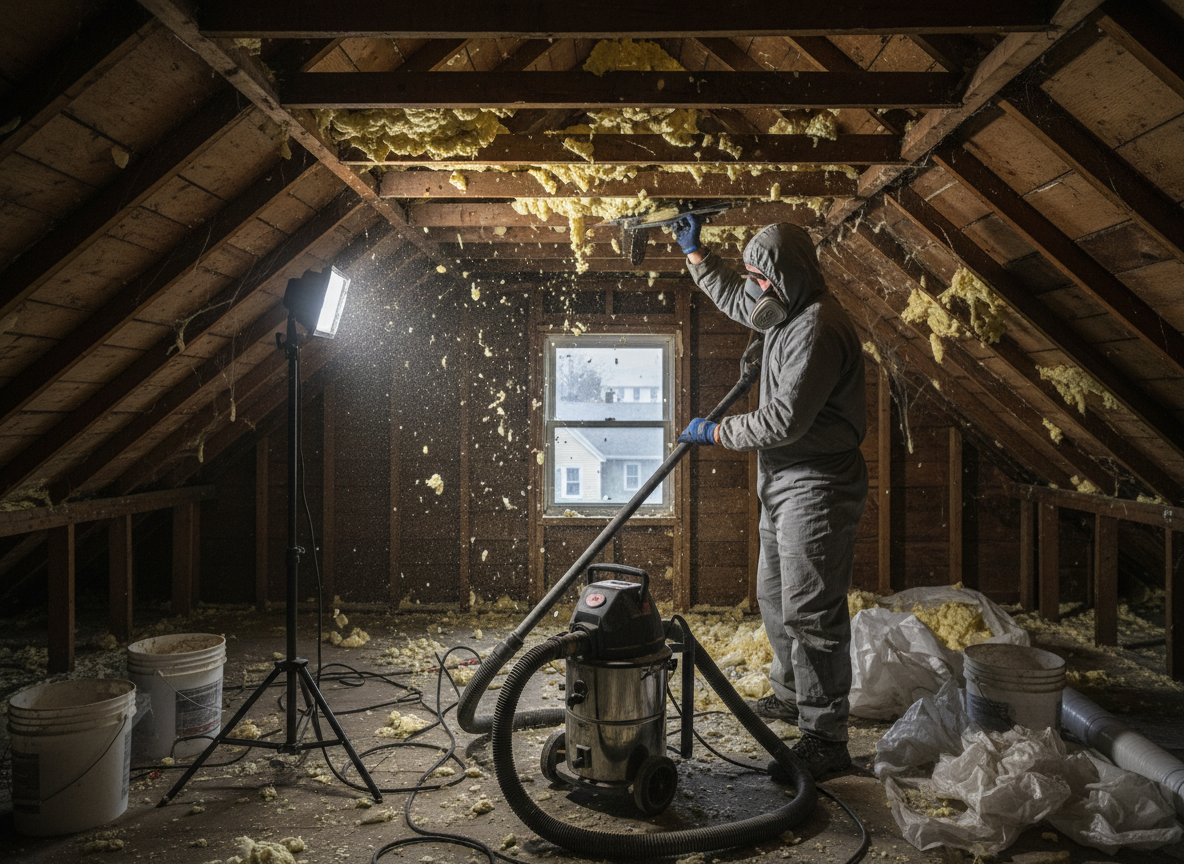
Night call-outs are common after heavy storms when water tracks along foam edges and homeowners notice sudden leaks. The process starts with isolating the affected loft or void, then using negative air machines to contain dust before mechanical scraping and solvent softening. In Plymouth's narrow terraced streets, access often means carrying equipment through front rooms rather than rear gardens, adding time but avoiding damage to shared walls.
After extraction, rafters and joists must be dried and treated before any new insulation goes in. Building control in Devon sometimes requires photographic evidence of complete removal when foam has bridged ventilation paths, particularly in converted lofts near the naval base. Leaving residue risks future condensation problems that spread to neighbouring properties in a terrace.
Homeowners in Plymouth frequently discover the foam was installed without proper ventilation gaps, trapping moisture against slate roofs that already see high rainfall. Full removal restores airflow and prevents recurring mould on bedroom ceilings below.
Technician insight
In Plymouth, the thing that catches most people out with 24/7 Spray Foam Removal is how quickly coastal damp soaks into foam applied straight onto rafters in Victorian terraces around Devonport and Stonehouse. Once water sits against the timber, rot spreads along the full run before anyone notices ceiling stains downstairs.
Storm Leak in a Mutley Terrace
Heavy overnight rain forced water along foam edges in a 1930s terrace loft. We found saturated foam bridging every rafter and mould already on the ceiling joists. Extraction took four hours with full containment; the owner could re-roof the following week without further damage.
How it works
- 1
Initial Assessment
Visit the Plymouth property at any hour to inspect foam location, depth, and any water damage in lofts or voids.
- 2
Containment Setup
Seal the work area with sheeting and negative pressure to stop dust migrating into living spaces in terraced homes.
- 3
Foam Extraction
Mechanically remove and bag the foam layer by layer, treating stubborn sections with approved softeners.
- 4
Surface Treatment and Clearance
Clean rafters, apply timber preservative where needed, and remove all debris before handing back the space.
Pricing
Cost depends on loft size, foam thickness, and access difficulty in Plymouth terraces; we provide clear upfront quotes after inspection.