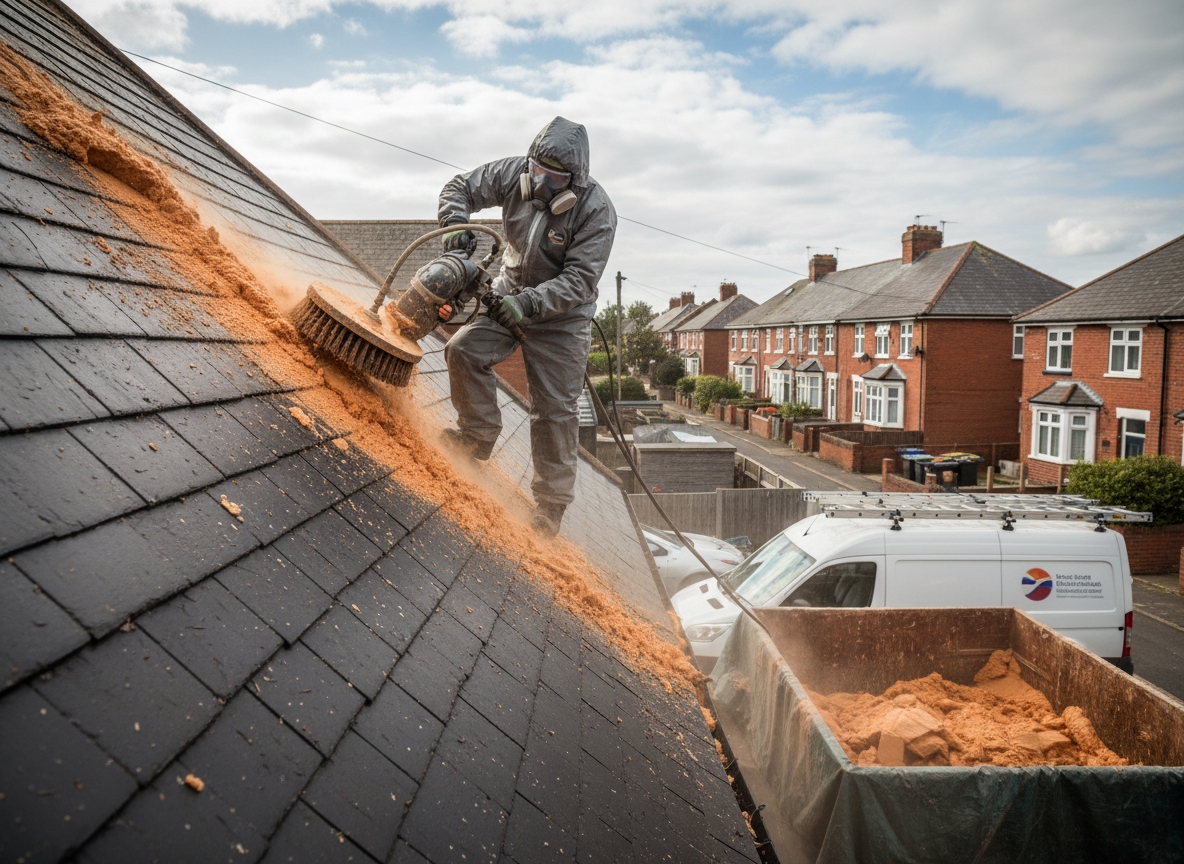
Plymouth's older housing stock, particularly Victorian terraces in areas like Mutley and Stoke and post-war homes around Efford, often received spray foam insulation on the underside of slate roofs. Over time the foam traps moisture from the region's frequent rain and salt-laden winds, leading to timber decay and poor ventilation. Removal requires cutting back the foam in controlled sections while protecting original laths and rafters that have already been stressed by decades of coastal exposure.
The process starts with a full underside inspection to map foam thickness and identify any hidden water ingress points common on north-facing pitches near the Hoe. Workers use negative-pressure containment to prevent particles drifting into living spaces below, especially important in narrow terraced properties where lofts sit directly above bedrooms. All waste is bagged on site and removed the same day to avoid leaving residue that could re-adhere during damp weather.
After extraction, roofs are left to dry for several days before any new insulation is considered. In Plymouth's climate this drying period is essential because residual moisture can quickly lead to mould on the remaining timber. Homeowners are advised to have a roofer check slate condition from above once the foam is gone, as fixing points may have been compromised during the original foam application.
Local building control expectations in Devon require that any changes to roof ventilation are documented, particularly when foam removal restores airflow to older properties that were never designed to be sealed. Skipping this step can create future compliance issues if the house is sold or extended.
Technician insight
In Plymouth the thing that catches most people out with roof spray foam removal is how quickly salt-laden rain gets behind the foam on north-facing pitches in terraces around Devonport and Stonehouse, turning small gaps into widespread rot that only shows once the foam is stripped away.
Foam Removal in a Mutley Terrace
Homeowner noticed musty smell and ceiling stains after heavy winter rain. Inspection found closed-cell foam trapping moisture against rafters in a 1900s terrace. We removed the foam in sections, ventilated the void, and confirmed no further rot after a week of drying. The roof now breathes properly and the smell has gone.
How it works
- 1
Site Survey and Assessment
Inspect the roof void from inside, measure foam depth, check for rot in rafters and laths, and note ventilation paths typical in Plymouth's older roofs.
- 2
Containment Setup
Install dust barriers and negative air units to protect living areas below, especially in terraced homes where lofts share walls with neighbours.
- 3
Foam Extraction
Cut and remove foam in sections, keeping original roof structure intact and bagging all debris for immediate removal from site.
- 4
Post-Removal Inspection and Advice
Allow drying time, advise on ventilation improvements, and coordinate with a local roofer if slate repairs are needed from above.
Pricing
Cost depends on roof size, foam thickness and access; inspection provides a firm quote before work begins.