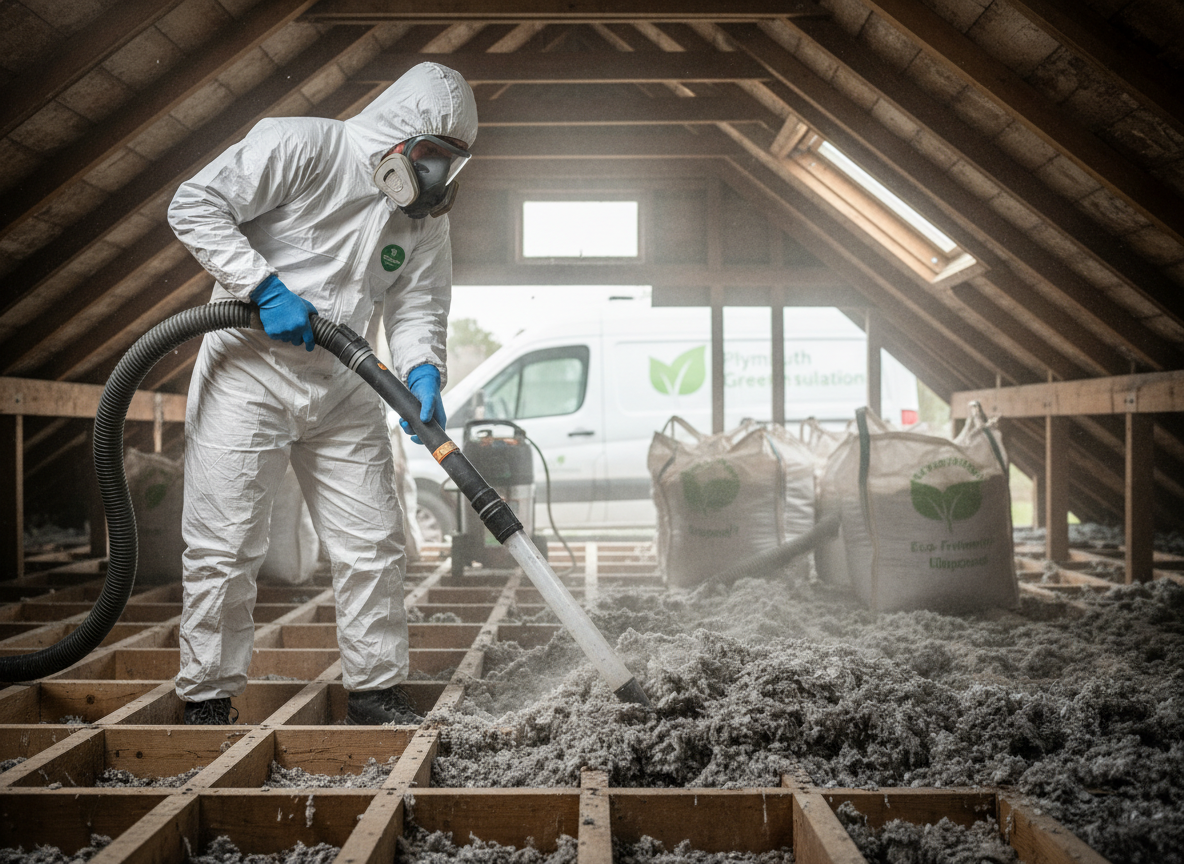
Plymouth's Victorian terraces and post-war semis in areas like Mutley, Stonehouse and Efford often received spray foam loft insulation decades ago. Over time the closed-cell material traps moisture against timber and slate roofs, especially during the county's frequent heavy rain and mild winters. Environmentally friendly removal starts with containment sheeting and negative air machines to prevent dust migration into living spaces, followed by mechanical scraping and vacuum extraction that leaves rafters clean without chemical residues.
Homeowners frequently discover hidden issues once the foam comes off. Rotting sarking boards, corroded fixings and blocked eaves ventilation are common in properties built before 1950 because the original builders never anticipated impermeable layers. Our process includes a full inspection of the roof void, targeted timber treatment where needed, and proper disposal of the removed material at licensed sites rather than landfill. This approach complies with current waste regulations while restoring breathability to the roof structure.
Access challenges differ sharply between flat-roof extensions common in Keyham and the steep pitched roofs of central Plymouth terraces. Narrow loft hatches and low headroom mean equipment must be broken down and carried in sections. We also account for the high water table near the waterfront, which can increase humidity levels and slow drying after removal, requiring temporary dehumidifiers in some jobs.
Technician insight
In Plymouth, the thing that catches most people out with environmentally friendly insulation removal is the way spray foam hides rot in the older terraces around Mutley and Stonehouse where the frequent westerly rain drives moisture under the foam and into the sarking before anyone notices.
Spray Foam Removal in an Efford Terrace
The homeowner reported persistent damp smells after heavy winter rain. Inspection revealed closed-cell foam trapping condensation against the rafters. We removed the material in sections, treated the affected timber, and restored eaves ventilation. The loft dried out fully and the musty odour disappeared.
How it works
- 1
Initial Assessment
Inspect the loft or cavity, identify foam type and note any moisture damage or access restrictions typical of Plymouth properties.
- 2
Containment Setup
Install dust barriers, negative pressure units and floor protection to keep the rest of the home clean during removal.
- 3
Foam Extraction
Use low-impact mechanical methods and HEPA vacuums to strip the insulation without damaging underlying timber or roofing.
- 4
Site Clearance and Disposal
Remove all debris, treat affected areas if required, and transport waste to approved recycling or disposal facilities.
- 5
Final Ventilation Check
Restore airflow, check for remaining damp and advise on ongoing roof maintenance suited to Devon's climate.
Pricing
Pricing varies according to property age, roof pitch, access difficulty and volume of insulation in Plymouth homes.