2026-10-22 ·
How Plymouth Winters Trigger Spray Foam Issues in Lofts
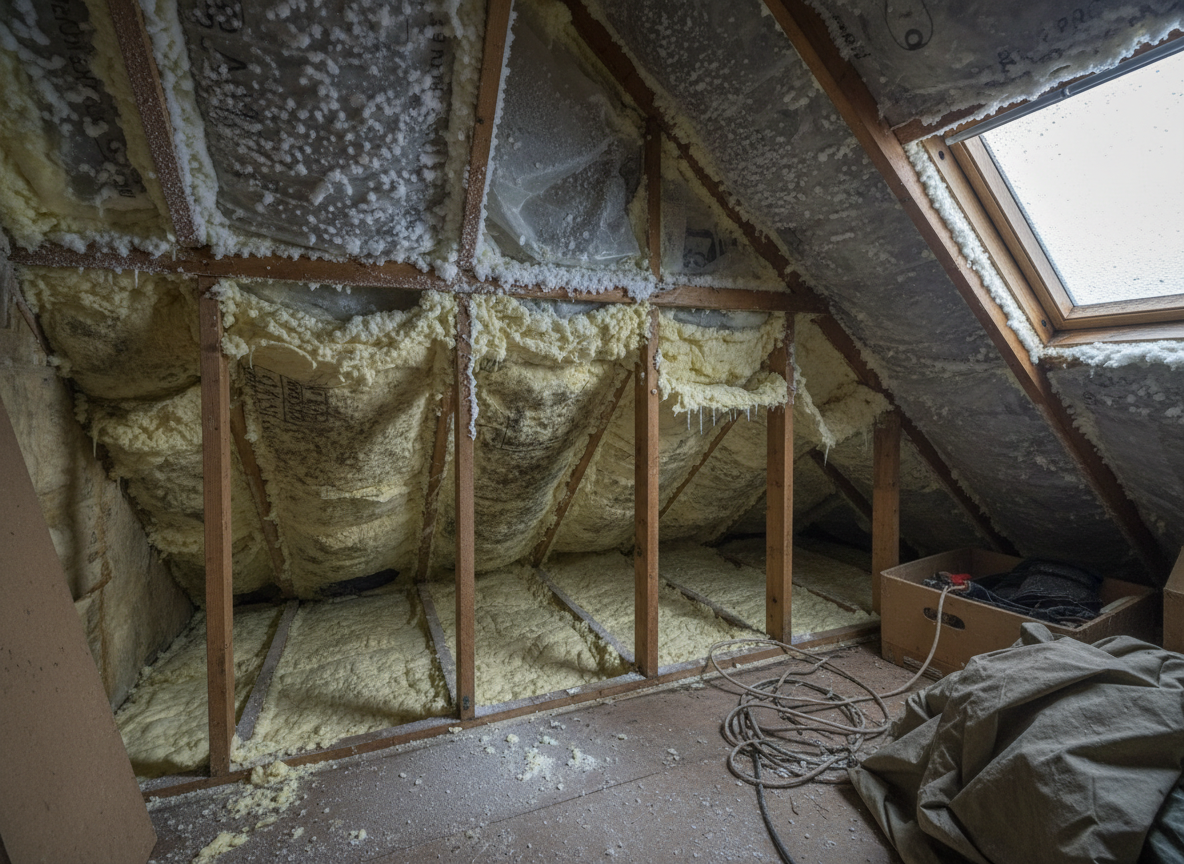
Plymouth winters with frequent rain and temperatures often between 4°C and 8°C trigger condensation under spray foam in lofts because the foam seals out ventilation that older roofs need. This leads to trapped moisture on rafters and insulation failure within two to three seasons in many Devon terraces.
Plymouth's Damp Winter Patterns and Loft Ventilation
Plymouth sits on the southwest coast where Atlantic weather systems deliver 40 to 50 inches of annual rainfall, much of it between November and February. Older properties in Mutley, Stonehouse and Devonport rely on natural airflow through ridge vents and eaves that closed-cell or open-cell spray foam blocks. Once airflow stops, warm indoor air meets cold roof slates and moisture condenses directly onto timber. Over repeated cycles this raises loft humidity above 70 percent for weeks at a time, softening rafters and encouraging mold growth on the foam surface itself. Local roofers note that south-facing slopes suffer fastest because they receive the most driving rain while north slopes stay colder longer.
How Spray Foam Reacts in Victorian and Edwardian Lofts
Most Plymouth housing stock dates from 1890 to 1930 with narrow roof voids and original lath-and-plaster ceilings. Spray foam applied directly to the underside of slates prevents the roof from breathing as it was designed. During a typical January cold snap the temperature difference between the heated rooms below and the slate above reaches 15°C or more. Water vapor rises, hits the impermeable foam layer and runs back down onto wall plates. Within three winters many homeowners report dark staining along ceiling joists and a musty smell when they open the loft hatch. The same pattern appears in terraced homes near the Hoe where salt air adds extra corrosion risk to metal fixings.
Practical Assessment Steps for Plymouth Homeowners
Start by checking the loft on a dry day after a period of heavy rain. Look for water streaks on the foam, soft spots in rafters and white mold patches near the eaves. Measure humidity with a simple meter; readings above 65 percent indicate ongoing condensation. Note any recent roof repairs or new felt that may have reduced original ventilation gaps. If issues appear, contact a specialist for loft spray foam removal before the damage spreads to ceilings. Properties near the coast face extra challenges from salt-laden air that accelerates timber decay once moisture is trapped; see the details in Local Challenges Removing Spray Foam Near Plymouth's Coast. Early removal often prevents the need for full rafter replacement that can add several thousand pounds to a project.
Timing Removal Around Plymouth Weather Cycles
Schedule inspection and removal work between April and September when daytime temperatures stay above 10°C and rainfall drops. This window allows proper drying of timbers before any new insulation is considered. Crews working from the base at 32 Mayflower St can reach most Plymouth postcodes the same day during this period. After removal, many owners choose to restore traditional ventilation with new soffit vents and a breathable membrane rather than reapplying foam. Monitoring the loft for one full winter after the work confirms whether humidity levels return to the 45 to 55 percent range typical of properly vented Devon roofs.